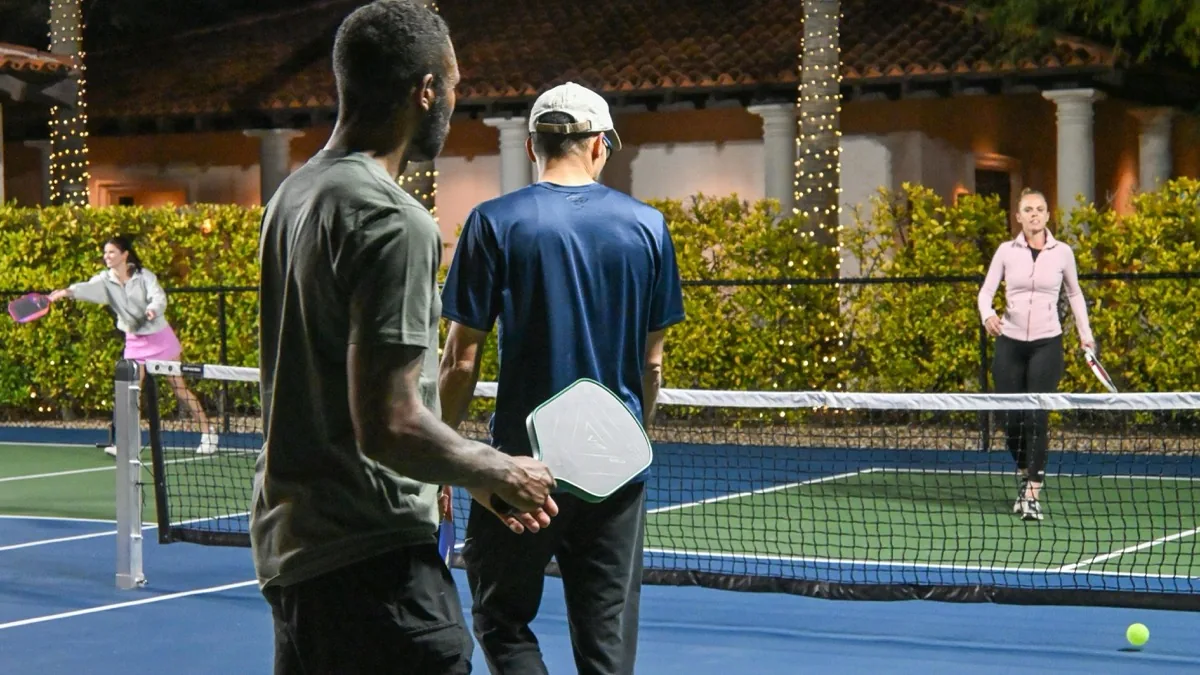
How Singles Differs from Doubles
It's basically a different sport in some ways. Understanding the differences helps you adjust your game.
More Court to Cover
Obviously you're covering the whole court alone. But it's more than twice as hard because angles open up that don't exist in doubles. Cross-court passing shots become much more dangerous.
The Kitchen Is Less Critical
In doubles, everyone camps at the kitchen line. In singles, the net position is less automatic. Sometimes staying back makes more sense because you need to cover the whole court.
Fitness Matters More
No resting while your partner takes shots. Every ball is yours. Games go longer. You need cardio and recovery ability that doubles doesn't demand as much.
Power Becomes More Valuable
Passing shots work because there's no partner to cover. Driving and hitting winners is more effective than the patient dinking game of doubles.
Serving Strategy
The serve matters more in singles because you're trying to set up the whole point.
Go Deep
Push your opponent back with deep serves. Short serves let them step in and attack. You want them hitting returns from behind the baseline.
Mix Placement
Don't serve to the same spot every time. Go wide to the backhand, then down the middle, then to the forehand. Keep them guessing and prevent them from grooving their return.
Use Spin
Spin serves are more effective in singles. A high-kicking topspin serve pushes opponents back. A slice serve pulls them off the court. Variety creates opportunities.
Positioning Choices
Where you stand changes based on the situation.
Not Always at the Net
In doubles, you want to get to the kitchen line as fast as possible. In singles, that's not always right. If you're at the net, a good passing shot beats you. Balance your positioning based on the opponent.
The Transition Zone
Many singles points play out with both players in the middle of the court. You're close enough to attack short balls but far enough to cover lobs and passing shots.
Center Recovery
After every shot, try to recover to center. From there you can reach either side. Getting stuck on one side opens up the whole other half of the court.
Shot Selection
What works in doubles doesn't always work in singles.
Passing Shots
These are your friend. When your opponent commits to the net, hitting past them wins points. Work on driving the ball low and angled cross-court.
Dinking Less
Long dinking exchanges are less common. They happen but often someone looks to speed up or pass because the court is so open. Dinks are tactical tools, not the default mode.
Lobs Work Better
In doubles, lobs get crushed because two people cover the court. In singles, a well-placed lob can be a winner. Use them strategically when your opponent is way up at the net.
Drop Shots
With one person covering the whole court, drop shots that would be easily retrieved in doubles become more effective. Pull them forward then pass them.
Fitness Considerations
You can't hide in singles. Your conditioning shows.
Cardio Endurance
Points are longer. Matches are more demanding. If you're gassed by game two, you're not going to win. Work on your baseline cardio outside of pickleball.
Lateral Movement
You're covering sideline to sideline constantly. Lateral agility matters more than straight-line speed. Practice moving side to side efficiently.
Recovery Between Points
Take your time between points if you need it. Walk to get balls slowly. Use the breaks. Singles players who rush between points often fade late.
Playing to Your Strengths
In singles, you can build your game around what you do well.
Good Legs
If you're fast and fit, extend rallies. Make them hit one more shot than they want to. Win through attrition.
Big Forehand
Run around backhands when possible. Set up with your forehand and look for putaways. Dictate with power.
Good Touch
Use drop shots and angles to move your opponent around. Make them cover distance while you control the point.